Gone are the days of uniform communication to reach the widest possible audience. Make way for personalized marketing, or one-to-one marketing!
This approach involves tailoring your message and your offer precisely, not only to your core target audience, but also to the individuals within that audience. The idea? To strengthen your relationship with your customers and become a permanent fixture in their consumption habits.
Here is a detailed guide to personalized marketing, its benefits for your business, and how to implement it. Of course, we've included some concrete examples of one-to-one marketing to inspire you!
Although all good marketing now takes into account a core target audience, i.e., a limited group, personalization goes further by placing the individual at the center of its concerns. With this in mind, marketers may employ methods such as using the contact's first name or suggesting products based on their browsing history—adding a personal touch to every interaction.
The main goal of personalized marketing is to stimulate engagement and build long-term customer loyalty. Consumers who feel valued as individuals are more inclined to maintain their connection with a brand that speaks to them.
While one-to-many marketing aims to broadcast the same message to a large audience (similar to traditional mass marketing), one-to-one marketing and service focuses on creating customized experiences for each individual. This is also distinct from differentiated marketing, which targets different segments with tailored messages, but still groups customers rather than treating them as individuals. The shift from mass marketing vs. one-to-one marketing represents a fundamental change in how companies build customer relationships in the digital age.
Here is an overview of the four types of personalized marketing strategies to get you started on the right foot. These characteristics of one-to-one marketing form the foundation of successful implementation.
The four levers of personalized operational marketing are defined as follows:
Has this ever happened to you? You receive a promotional text message from your travel agency offering you a discount on trips to the Bahamas, for example. The message is well written, uses your name, and you happen to be looking for the most idyllic tropical destinations, so it immediately catches your attention.
This is a concrete example of personalized direct marketing and personalized advertising!
Its main advantage is that it allows for targeted communication with measurable impact and a good conversion rate.
Direct marketing relies on various means, such as SMS campaigns, phone calls, emailing, and social media—all enhanced by digital technology.
Why do you choose a particular brand of cookies? Because it reminds you, for example, of the happy days of snack time in your grandmother's garden. This brand knows how to speak to the child in you, who needs sweetness and comfort.
This is what personalized relationship marketing is all about.
Through a more detailed understanding and knowledge of the customer, the brand or company adapts its offering and communication to meet their needs and expectations, both in terms of the product and on a social and psychological level. The brand becomes a reference point for the customer, not only through its offering but also through the privileged dialogue it establishes with them.
It complements more direct approaches such as direct or operational marketing, with the aim of creating a lasting bond with the consumer.
The last time you bought a houseplant at a garden center, what impressed you the most? Was it the friendliness of the sales staff? Their professional advice on how to care for your new Monstera? The relaxing atmosphere of the store?
These different aspects are an integral part of experiential marketing.
This is just as important as the quality of the product itself: as humans, our emotional and sensory needs are always at the center of our experience. And that includes the brands we interact with!
A pleasant experience with a brand leaves a positive memory of it and encourages the customer to return in the future.
Effective and friendly customer service that uses the customer's first name in interactions, quality products or services tailored to their emotional and functional needs, stores designed to generate positive feelings, and a user-friendly website... There are endless aspects to work on to optimize your personalized experiential marketing!

Personalized content marketing refers to the design of content (videos, emails, articles, social media posts, blog posts, etc.) tailored to the needs of the targeted individual.
It involves creating tailor-made content for a specific person, or for a typical customer profile, using various tools such as intelligent chatbots or personalized emails (with first names, geolocation data, etc.). This approach to digital personalization allows companies to deliver the right message to the right person at the right time—a great way to stand out in a crowded marketplace.
Wondering how calling your favorite customer Ms. Parolédor by her first name (Carla) can benefit your business? Here are 5 concrete advantages of personalization.
As you know, any marketing strategy requires a thorough understanding of its target audience beforehand. This is especially true with personalized marketing, which relies on precise identification of its target audience through detailed segmentation.
This allows you not only to tailor your offering and communication in the moment, but also to anticipate changes in your customer base so you can better meet their needs in the future. According to previous McKinsey research, companies that excel at personalization generate significantly more revenue from these efforts.
What makes you automatically call your best friend when things aren't going well? Perhaps their ability to listen and their availability? Or their constructive advice?
The effect goes far beyond purchasing habits: with personalized and regular communication, a real bond of closeness is created. You become part of your customer's daily life and cultivate a lasting relationship. (Almost) like a friend whose presence is comforting!
With a traditional marketing strategy, the goal is to "cast a wide net" by seeking the engagement of as many people as possible. This approach may be relevant at first, for example, to make yourself known to as many people as possible.
However, communication that targets too broad or poorly understood an audience risks not being heard or delivering irrelevant messages. Yet any strategy, whatever it may be, requires resources (financial, human, and material)! Mass marketing is generally even more expensive, as it involves larger-scale distribution.
Personalizing your marketing efforts also means ensuring better sales!
When you offer a product or service tailored to your customer based on their buyer persona, you are more likely to meet a real need. They are therefore more inclined to take action by purchasing the suggested product or service—whether through product recommendations or personalized offers.
Furthermore, unlike generic marketing, personalization allows you to refine your message by retaining only the essential information. This makes the marketing funnel smoother, which further encourages customers and prospects to take action. And thus, to increase revenue.
By adapting its offer and message to its target audience through personalization, a brand improves its brand image and perceived value for several reasons.

As you can see, successful personalized marketing is essential for building loyalty among a specific target audience. Here are the five essential one-to-one marketing steps for implementing it—a practical step process that any one-to-one marketing company can follow.
Understand Your Target AudienceStep one: Define your target audience precisely by collecting customer data. To do this, you can ask yourself the following questions:
To answer these questions, you can use various tools such as questionnaires, surveys, browsing data (analytics), CRM systems, and other sources that provide valuable information from multiple sources.
Segment Your AudienceTo ensure you are addressing the right person, you then need to segment your mailing lists according to various criteria. Proper segmentation is crucial for effective personalization.
To do this, you can, for example, group your customers according to:
Once this segmentation has been carried out, you can tailor your message according to these different criteria to optimize personalization. This allows you to create marketing campaigns for each specific segment rather than treating all consumers the same way. Digital technology and marketing automation tools make it easier than ever to manage multiple customer segments effectively.
Define Your ObjectivesTo know which direction your strategy is heading in, you also need to define your specific objectives:
One workplace challenge that companies face is coordinating personalization efforts across different teams and channels. Clear objectives help overcome these coordination challenges.
Create Your Personalized CommunicationNow it's time to design your communication based on your target audience and your goals. The message and media used must match the specific expectations, needs, and characteristics of your customers.
For example, you can:
Choose Your ChannelsThe choice of distribution channels is just as important as the message itself. Your target audience will be more present on certain channels or more receptive to certain communication media. For example, to reach a young audience, you may want to focus on social networks such as TikTok or Instagram.
Each channel is more or less suited to a particular type of message:
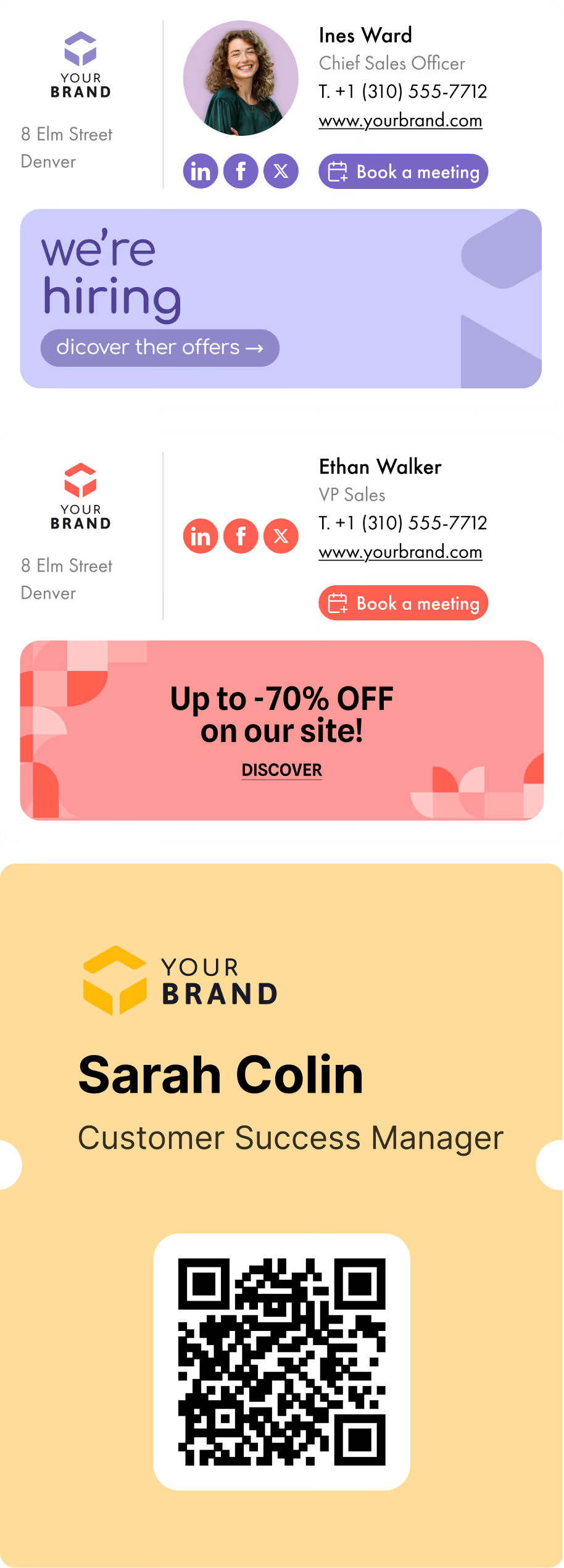
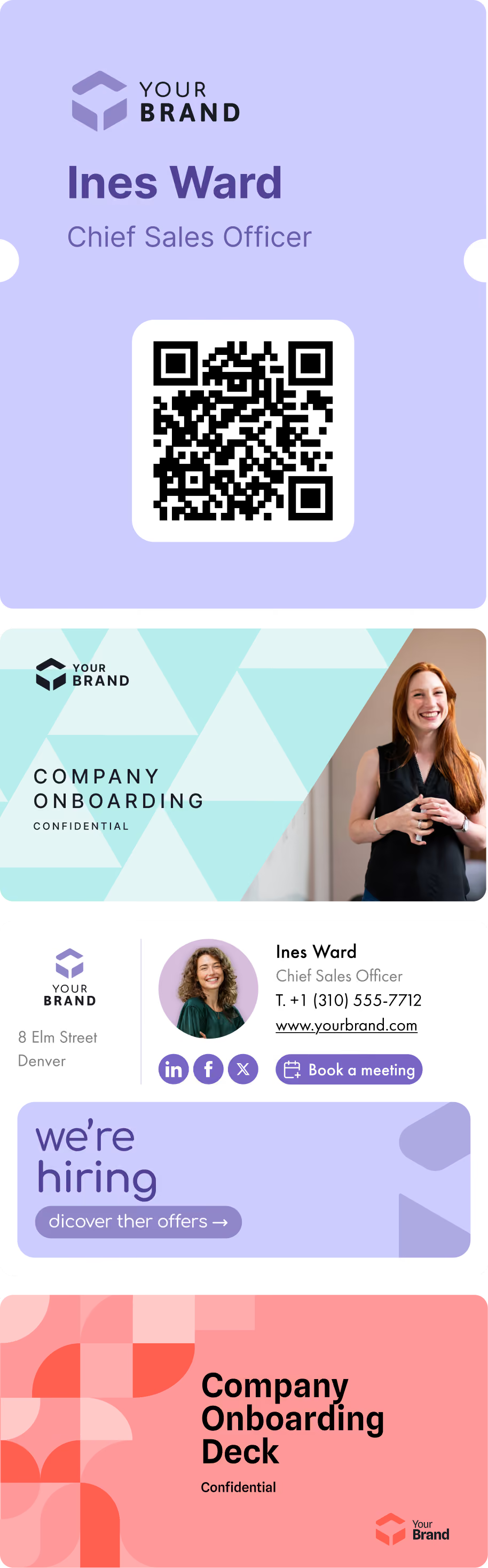
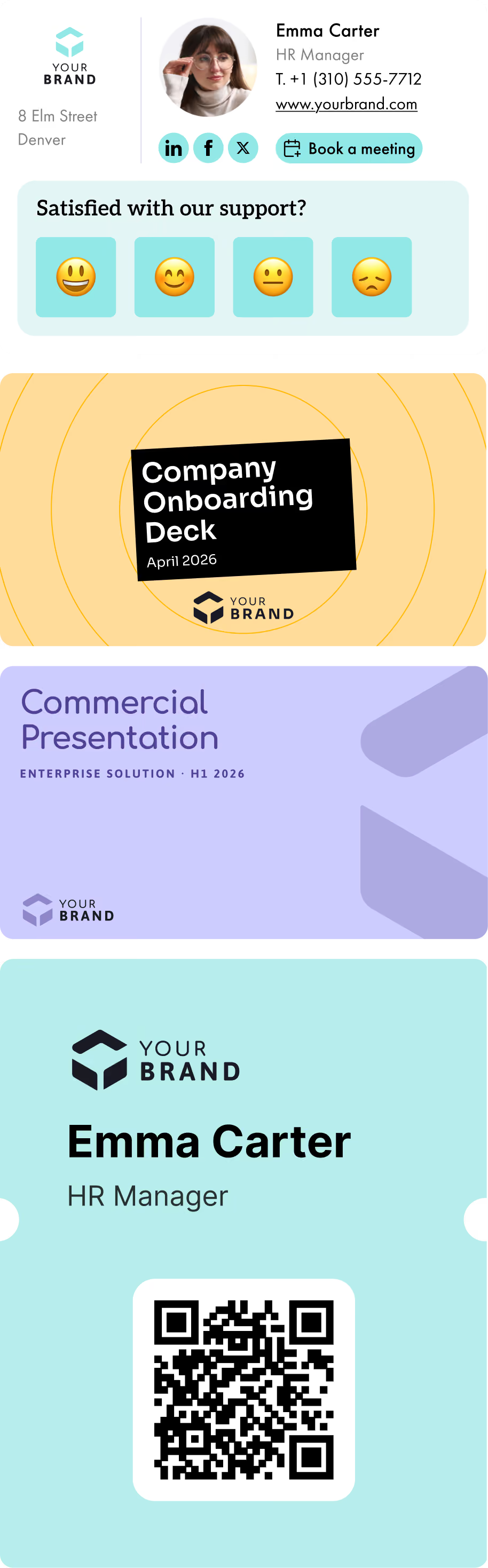
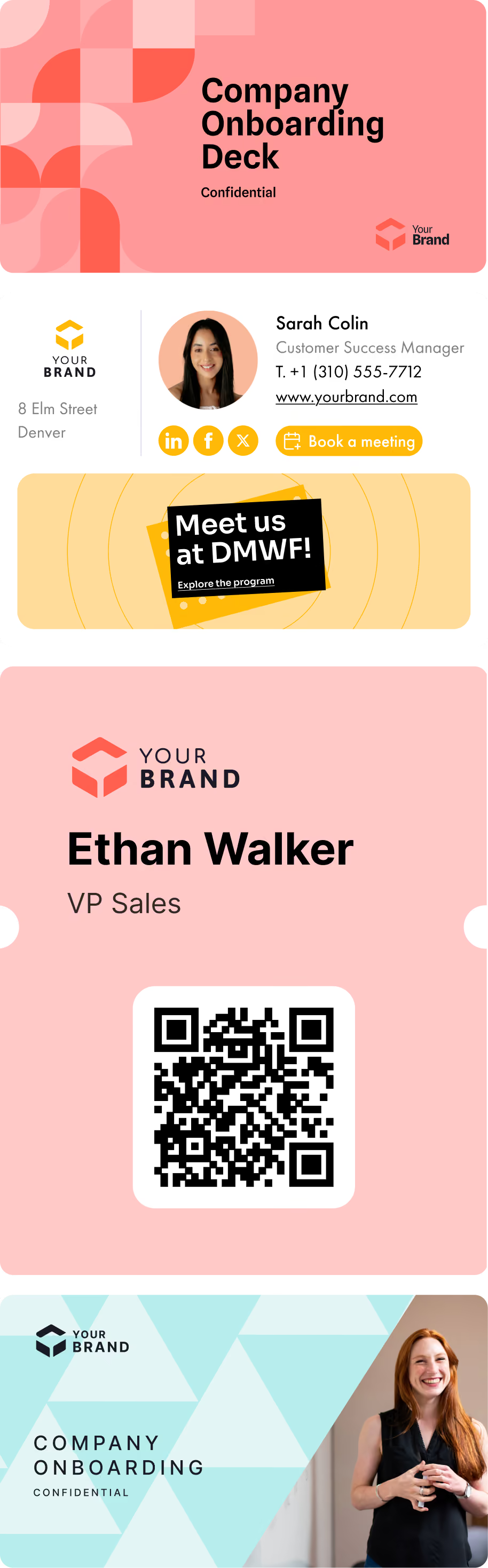
Don't forget about your email signature! It's an effective means of communication that can boost your marketing performance.
To give you some inspiration, here are 5 examples of personalized marketing tactics and tools you can use for your strategy.
Many successful brands have embraced personalized marketing strategies with impressive results.
Here are some notable examples:
These companies show how loyalty programs, personalized recommendations, and data-driven strategies can transform customer relationships. Marketers can learn valuable lessons from how Sephora, Amazon, and other leaders implement segmentation and personalization at scale.
***
Boost your sales and improve customer engagement with personalized marketing! And don't forget: your email signature is your ally for personalized communication. Find out how to measure its advertising equivalence.

Hyper-personalized marketing takes personalization to the next level by using real-time data, artificial intelligence, and machine learning to create highly individualized experiences for each consumer. Unlike traditional personalization that might segment customers into groups, hyper-personalization treats each customer as a unique individual, delivering content, product recommendations, and offers based on their behavior, preferences, and context at precisely the right time. This approach leverages data from multiple sources to create personalized customer engagement that feels truly one-to-one.
AI personalization in marketing uses artificial intelligence and machine learning to analyze vast amounts of customer data, predict behavior, and automate personalized experiences at scale. AI can identify patterns in browsing history, purchase behavior, and previous interactions to deliver product recommendations, personalized subject lines, and targeted content. This technology enables companies to overcome the challenges of marketing personalization by processing information from multiple sources and making real-time decisions about which personalized experiences to deliver to each consumer—something that would be impossible to do manually.
For marketers looking to deepen their understanding of personalized marketing, several resources stand out. The foundational one-to-one marketing book is "The One to One Future" by Don Peppers and Martha Rogers, which introduced the concept of treating customers as individuals rather than segments. This pioneering work laid the groundwork for modern relationship marketing and remains relevant today. Other valuable resources include case studies of companies that use one-to-one marketing successfully, industry reports on personalization trends, and practical guides on implementing CRM systems and marketing automation tools for personalization.
The difference between these two approaches lies mainly in the degree of precision. Whereas mass marketing seeks to reach the widest possible audience with a uniform message, one-to-one marketing targets individual customers with tailored experiences based on their unique needs and preferences. According to McKinsey, companies that excel at personalization can drive 5 to 15 percent increases in revenue and 10 to 30 percent increases in marketing efficiency. Mass marketing might work for building initial brand awareness, but relationship marketing and personalized approaches are essential for building lasting customer loyalty. Both approaches have their merits, depending on the brand's objectives, but personalization trends show that consumers increasingly expect tailored experiences.