Clear, accessible, and varied information is an indispensable asset for maintaining team motivation and achieving change successfully.You’ve decided you need to change. You’ve identified the processes that need improving or the new service offer you want to launch—or you’ve decided to do a complete turnaround to deal with the consequences of the pandemic. Now you just need to know where to start. Of course, jumping in blindly might be counterproductive.
Company change must be well thought out, planned and targeted. Keep in mind one essential factor: a company can only change through the people who comprise it.
A successful desire to change results not from a general policy imposed from the top, but through behavior adopted by each of a company’s employees. Thus, any company change must factor in the inevitable personnel resistance and the challenges specific to each individual and team. In short, it must put humans first.
To accomplish this, there are many levers and models which will measure behavioral change factors and analyze them based on different criteria: motivation, ability, complexity of requested adjustments, and much more.
In his book “65 Tools to Support Individual and Collective Change,” Arnaud Tonnelé presents a simple matrix to guide how we think about a change, and to help us consider potential obstacles, both internal and external.
This matrix relies on four elements:
These first two points are rarely forgotten in change management. The same cannot be said for the last two, despite their equal importance.
To get employees on board with the change, companies must factor in these last two points carefully – ability and means. Companies often think they’ve done so by providing training. Of course, plans to support new tools, new offers, etc. are necessary, but they are not enough. Employees not only need to be trained, but informed. Companies must communicate effectively about the nature of the project, the planned steps, the expected benefits, etc.
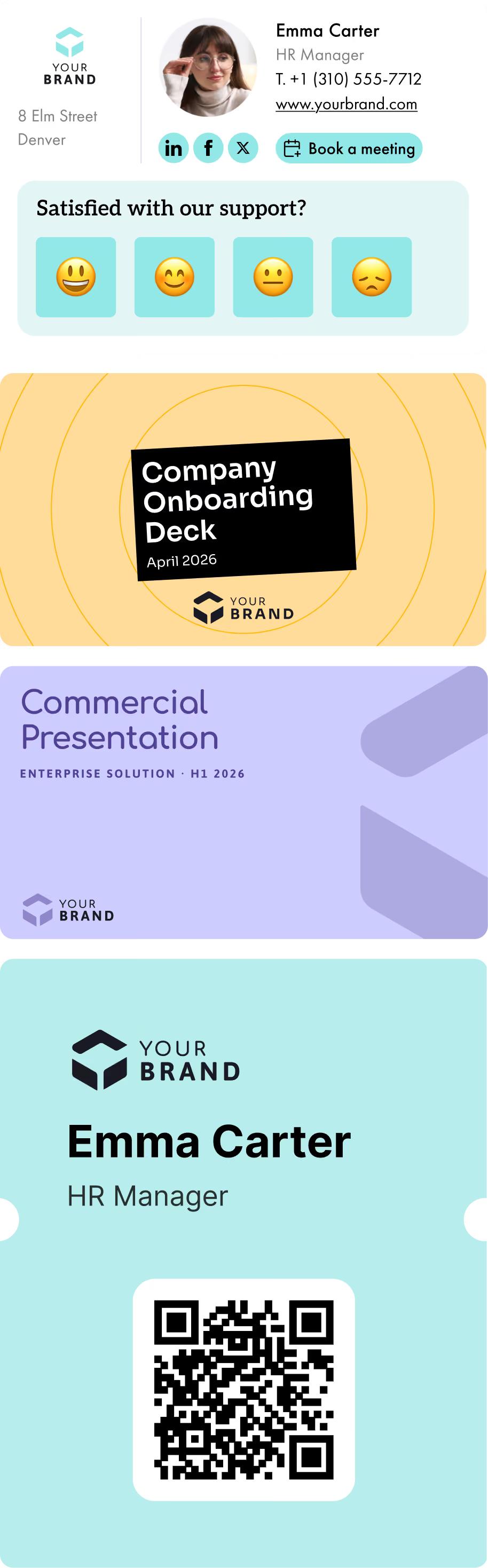
Leaders, HR teams, and transition managers have a customizable tool at their disposal to do so: email signatures. This tool covers all five components of internal communication that are particularly suited to change management:

A change policy that uses email signatures as a channel can get targeted employees involved and mobilized by making them participants in the transformation. Whereas training is generally a one-off event, the beauty of communication is that it can be continuous and standardized. A company stands only to gain by integrating and relying on an internal communications campaign using email banners.
These will serve to:
For example, it’s possible to create recurring or one-time banners and target specific groups or objectives within the company. A final crucial point: piloting change using an email signature campaign also helps to highlight and communicate successfully completed stages.
Communication is the key to effortlessly cultivating meaning, sustaining employee motivation, and achieving successful change.

Sources: https://www.managersenmission.com/blog/debloquer-resistances-changement/
https://fr.blog.businessdecision.com/les-3-piliers-changement-entreprise/