.svg)



You may have noticed: today, it is almost impossible to escape the digital wave. Whether you are an ambitious startup, a passionate small business owner, or an established brand, your future customers are already looking at their screens!
Digital communication is now at the heart of modern brand visibility. More than just another advertising channel, it represents a fundamental shift in the way businesses connect, communicate, and build lasting relationships with their audiences.
But where should you start if you want to build a structured digital communication strategy without getting overwhelmed? Between the growing number of channels, constantly changing social media algorithms, SEO challenges, and continuous technological developments, creating a consistent digital presence requires both a clear methodology and the right expertise.
Let’s take a closer look at the fundamentals, opportunities, key digital communication channels, and essential skills you need to grow your online presence.
Digital communication, sometimes referred to as online communication, encompasses all the practices, channels, and techniques used to share information through digital media and platforms. Unlike traditional media such as print, television, radio, or static outdoor advertising, digital communication is characterized by immediacy, interactivity, and two-way communication.
In practical terms, digital communication covers everything from your official website and social media presence to email marketing campaigns and interactive digital experiences.
The sender is no longer simply broadcasting a one-way message to a passive audience, as was traditionally the case with advertising.
Today, audiences can respond, share, comment, review, and interact. In other words, they actively participate in the conversation. Static communication channels are increasingly replaced by dynamic digital experiences, making information more fluid, immediate, and continuous.
Digital communication has fundamentally transformed the way businesses communicate and operate. But what are the practical reasons for making it a core part of your business strategy?
First, the web offers a level of responsiveness that traditional print-based communication simply cannot match.
While producing a brochure or catalog can require weeks of preparation, approval, printing, and distribution, digital communication allows businesses to react almost instantly.
A change to your schedule? A last-minute product launch? A response to breaking news or an important development in your industry? Within a few clicks, information can be written, designed, and distributed to thousands of subscribers through the channel of your choice.
This speed also makes organizations more agile. Businesses can easily adapt their communication based on audience feedback, whether that means changing the message itself or experimenting with a different format, channel, tone, or storytelling approach.
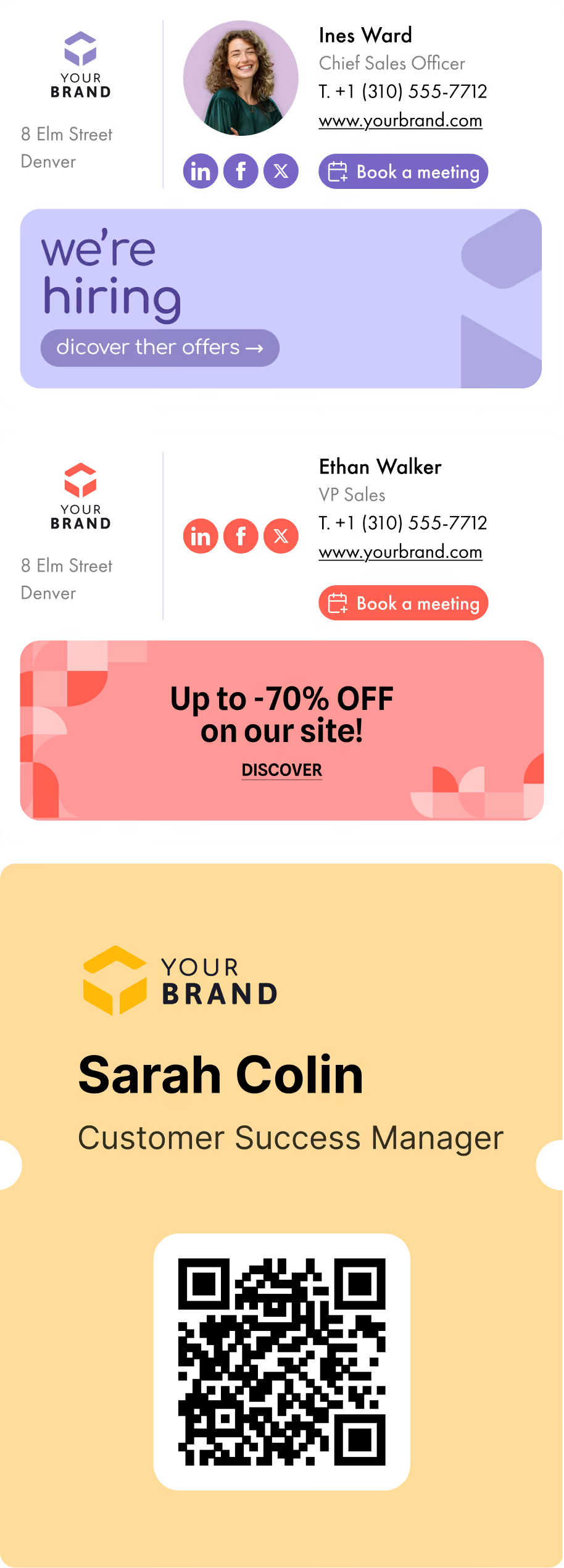
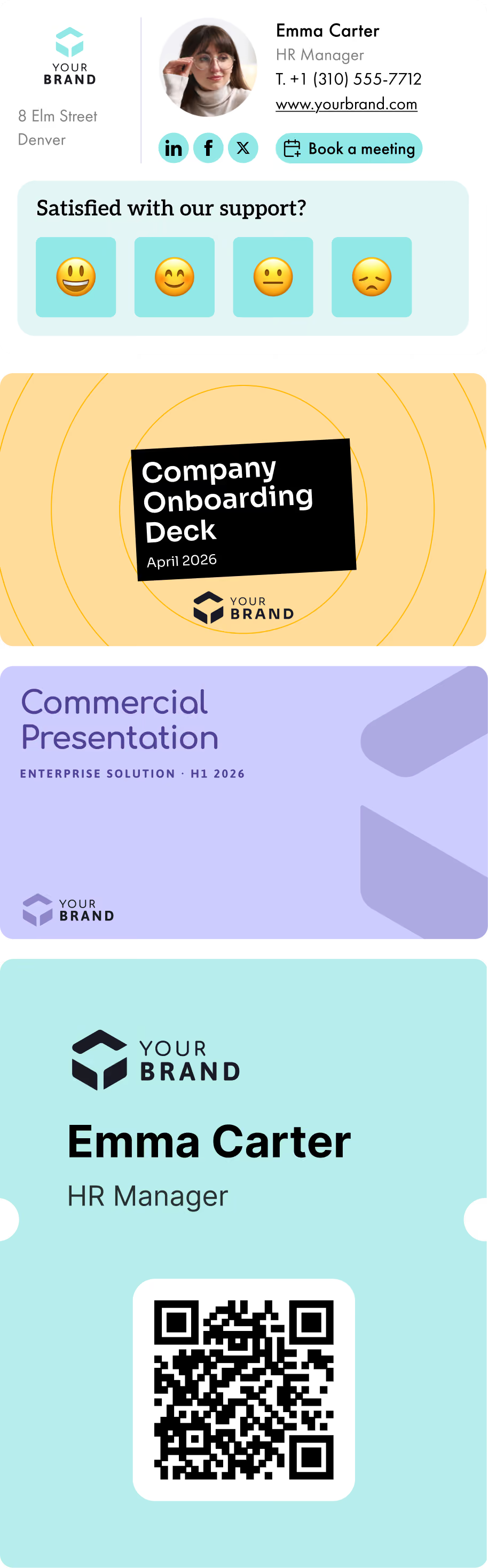
Email signatures can also be a useful way to share important updates quickly. Here’s how to create an email signature template.
Whatever your industry, your competitors are probably already active online. In such a competitive environment, building a strong and distinctive digital presence can help your brand stand out.
From a visual perspective, the internet offers countless opportunities to build and communicate a recognizable identity: design tools, social media platforms, video platforms, podcasts, and more interactive formats can all help you express what makes your brand different.
These channels also allow you to diversify your content and reach your audience in more direct and engaging ways.
But standing out online is not just about aesthetics. Consistent, useful, and educational communication that reflects your brand values can also demonstrate your expertise.
By providing practical answers to your audience’s everyday challenges, for example, you can establish credibility and demonstrate your expertise in a much more natural way than through a simple advertising slogan.
Like any communication strategy, digital communication should ultimately contribute to your business goals. It can help you attract new visitors to your website and gradually guide them toward a purchase or conversion.
A wide range of digital marketing tools can support this process: search engine optimization (SEO), in-depth blog content, newsletters, social media posts, and more. By consistently publishing useful content that addresses your audience’s needs, you increase your chances of being discovered at the right time and generating genuinely qualified traffic.
But attracting visitors is only the beginning. The content you publish should also support customer retention and help prospects move forward in their decision-making process.
A case study, customer testimonial, or article that provides a clear answer to a specific question can reassure potential customers, address common objections, and build trust in your offering.
Over the medium and long term, a consistent content strategy can therefore support customer acquisition and contribute to revenue growth, while gradually reducing your reliance on paid advertising.
One of the biggest advantages of digital communication is undoubtedly its relational nature. Instead of relying solely on one-way, corporate communication, digital channels encourage dialogue and meaningful interaction.
This can be as simple as responding to a comment, thanking someone for sharing your content, asking a question at the end of a blog post, or running an interactive poll. Small actions like these can make your organization feel more human and approachable.
Over time, these interactions help build a strong community around your brand — one that pays attention to your updates and is more likely to support your initiatives.
By providing a smooth, helpful, and positive customer experience across every digital touchpoint, you can turn occasional buyers into loyal customers and long-term brand advocates.
You already know the challenge: to communicate effectively with your audience, you need to rely on the right combination of channels and tools. The key is to select them according to your objectives and your audience’s digital habits.
Here are the essential tools and channels to consider. You can also explore our complete guide to digital communication tools for a deeper look at the different options.
Your website remains your digital home base — your online headquarters, so to speak. Unlike social media platforms, where you have little control over the rules, algorithms, and visibility of your content, your website is an asset you own and control.
It is where you welcome your audience, explain who you are, showcase what you offer, and demonstrate how you can solve their problems.
For your website to fulfill this role effectively, it needs to be carefully designed and optimized:
Social media platforms are essentially the modern-day agora.
Whether you are using professional platforms such as LinkedIn or visual and community-driven platforms such as Instagram, YouTube, TikTok, or Facebook, each channel has its own audience, culture, content formats, and pace.
As you have probably noticed, a TikTok creator specializing in dance trends does not communicate with their audience in the same way as a B2B marketing strategist on LinkedIn!
Whatever the platform, the professional goal is to create and participate in meaningful conversations, for example by:
Think email is outdated? Think again. Far from being obsolete, email remains one of the most valuable channels in the digital marketing landscape.
Unlike an ephemeral social media feed, an email lands directly in the inbox of someone who has chosen to hear from your brand.
By combining traditional email marketing with automated marketing sequences, you can deliver the right information at the right time. For example:
To make a lasting impression — and sometimes surprise your audience — digital communication constantly offers new technological opportunities:
Have you ever grown tomatoes? If so, you know that you cannot simply plant a seed and expect a basket of ripe fruit the next day! Good results take time, consistency, and the right approach — and digital communication is no different.
To avoid operating without a clear direction, the first step is to create a detailed digital communication plan. Think of it as a compass that helps guide your actions throughout the year while ensuring that your digital activities remain aligned with your overall business strategy.
The process revolves around four essential steps:
Once you have established your direction, it is time to put your strategy into action by defining your content strategy. This serves as the common thread running through all your communications, establishing your tone of voice, preferred vocabulary, priority topics, and content formats.
To maintain consistency over time:
Given the wide range of skills required to build and manage a successful digital strategy, many businesses choose to outsource some or all of their communication activities to a specialized digital agency — and for good reason.
A partnership with an agency can provide immediate access to a team of specialized professionals without requiring you to recruit and manage an entire in-house department.
The benefits can include:
When choosing an agency, look at several factors, including its previous work and client portfolio, its understanding of your industry, the transparency of its methodology, and the quality of the relationship established during your first conversations.
To understand what works in practice, it is worth looking at brands that have successfully turned digital communication into a powerful growth and engagement tool:
*****
Who said digital communication was a magic formula reserved for tech giants? Quite the opposite! At its core, digital communication is a human journey built on listening, creativity, and authentic interactions with your audiences.
One final piece of advice before we wrap up: don’t try to be everywhere from day one. Instead, focus on the channels that make sense for your brand, share your expertise and identity with confidence, and continuously refine your approach based on what you learn.
Ready to make your brand stand out online?

Digital communication refers to the use of digital channels and technologies to share information, communicate with audiences, and build relationships online. It includes websites, social media, email, messaging apps, and digital content.
Digital communication works by transmitting messages through internet-connected devices and platforms. Brands create content, distribute it through relevant channels, and interact with audiences through comments, shares, clicks, messages, and other forms of engagement.
Emerging technologies include artificial intelligence (AI), augmented reality (AR), virtual reality (VR), chatbots, voice technology, and interactive 3D experiences. These technologies are making digital communication more personalized, immersive, and interactive.
Digital communication tools and platforms are technologies used to create, distribute, and manage online communications. They include websites and CMS platforms, social media networks, email marketing tools, messaging apps, video platforms, collaboration tools, and analytics solutions.
Digital communication systems are technologies and infrastructures that enable the transmission of digital information between devices and users. They include networks, mobile communication systems, messaging platforms, and other connected technologies.