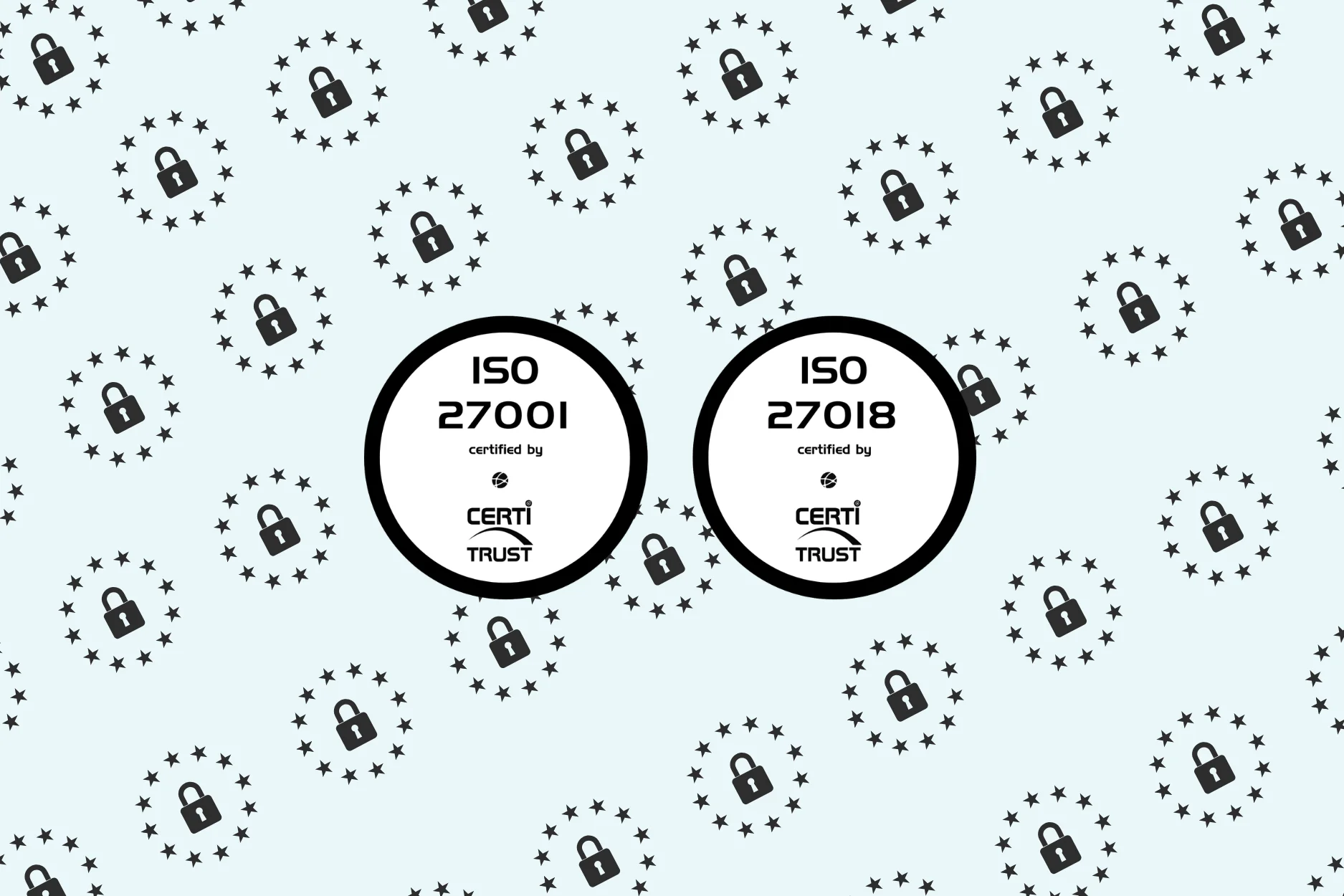

We have some good news to share: Letsignit has just successfully passed its ISO 27001 and ISO 27018 certification audits, in their most recent versions, 2022 and 2025 respectively.
Since 2022, Letsignit has gone through uninterrupted audit cycles, each involving a full reassessment of the controls in place against the most recent versions of the applicable standards. The move to ISO 27018:2025, a recently revised version of the standard, illustrates this continuous improvement approach: requirements evolve, and compliance is never set in stone.
Obtaining an ISO certification for the first time is already a substantial undertaking. Validating it over the years, against updated versions of the standards, is another matter entirely. Here's a quick reminder of what these two certifications represent:
Both certifications are awarded following an audit by an independent, accredited third party. For your teams, that's a documented guarantee, not a mere statement of intent.
Since 2018, Letsignit has made GDPR and data protection structuring pillars of its organization. This ISO validation follows that same logic: a continuous, audited and documented approach, not a one-off effort.
“GDPR isn't an end in itself. Above all, it's a framework that helps structure how data is used and clarify responsibilities around it.”
Frédéric Campagna, Letsignit DPO.
To go further on our overall approach to data protection, Frédéric explains in detail what shapes our practices day to day.
Letsignit is directly connected to your employees' email systems. Every signature deployed handles personal data: names, job titles, contact details, photos. That's exactly what these certifications govern.
For IT and CISO teams, they provide a tangible element in any vendor qualification process. The 2022 and 2025 versions of the standards cover cloud environments, directly applicable to a solution like Letsignit, and accredited third-party audits make the assessment objective, independent of any commercial claim.
For communications and marketing teams, it's the assurance that every email signature relies on infrastructure that is reliable, compliant and regularly audited. Our guide on email signatures and GDPR compliance explains how the two work together day to day.