.svg)



In today’s job market, employers are no longer the only decision-makers. Talented professionals also carefully evaluate the organizations they want to join. Some companies seem to attract top candidates effortlessly, but this success is usually driven by a well-executed recruitment marketing strategy.
A strong recruitment marketing strategy helps organizations showcase their culture, communicate their values, highlight authentic employee experiences, and create positive candidate journeys. These efforts not only attract qualified talent but also strengthen employee engagement and improve retention.
Modern recruitment marketing goes beyond job postings. It includes all initiatives that increase employer visibility, build a strong employer brand, nurture candidate relationships, and create an employee experience that supports long-term commitment.
Discover how recruitment marketing works and which strategies can help you attract the right talent, improve engagement, and build high-performing teams aligned with your company values.
Recruitment marketing refers to all the strategies and actions used to attract, engage, and nurture talent before they apply for a job, while also strengthening the overall employee experience after hiring.
Unlike traditional recruitment, which focuses mainly on filling vacancies, recruitment marketing focuses on building long-term relationships with potential candidates and positioning the organization as an attractive employer.
It draws inspiration from traditional marketing principles by treating candidates as an audience that needs to be informed, engaged, and convinced over time. The goal is to present the company’s culture, values, and opportunities in a way that naturally attracts the right talent while reinforcing internal engagement.
Ultimately, recruitment marketing helps organizations build teams that are not only skilled, but also motivated, culturally aligned, and committed to long-term growth.
Think of a company as a garden. Recruitment marketers act like gardeners, using strategy, communication, and experience design to create an environment where both people and performance can thrive.
A well-maintained garden does not only grow plants. It attracts new life, encourages diversity, and sustains long-term balance. The same applies to building strong organizations.
A thriving garden naturally draws attention. In the same way, a strong recruitment marketing strategy attracts candidates who are genuinely aligned with the organization’s culture and values.
By sharing workplace stories, promoting employee experiences, optimizing job descriptions, and maintaining an active presence on digital platforms, companies increase their visibility among relevant talent pools.
This leads to higher-quality applications, more efficient hiring processes, and a stronger match between candidates and roles.
Certain environments naturally create a sense of comfort and belonging, encouraging people to return year after year. Recruitment marketing works in a similar way inside organizations.
When companies communicate consistently and authentically, employees develop a stronger sense of pride and connection. This internal engagement naturally extends outward through advocacy, recommendations, and positive employer reputation.
Highlighting achievements, reinforcing shared values, and recognizing contributions all help strengthen employee engagement and create a deeper sense of belonging.
Every organization has a unique identity shaped by its history, values, culture, and mission. Recruitment marketing helps bring this identity to life and communicate it clearly to the outside world.
A strong employer brand enables candidates to identify whether they align with the organization before applying, while also reinforcing pride and commitment among existing employees.
This clarity improves both attraction and retention by ensuring better cultural alignment from the start.
Attracting talent is only the beginning. The real challenge is keeping it.
Recruitment marketing plays a key role in retention by ensuring that the employee experience matches the expectations created during the hiring process.
This includes structured onboarding, continuous learning opportunities, career development paths, recognition programs, and transparent internal communication.
When expectations and reality align, employees are more likely to stay, reducing turnover and strengthening long-term organizational stability.
A well-designed environment allows each individual to grow according to their strengths, needs, and aspirations.
Recruitment marketing supports this by promoting listening, feedback culture, and personalization throughout the employee journey.
From the hiring stage onward, understanding a candidate’s motivations and skills allows organizations to design better onboarding experiences and accelerate integration.
As a result, employees become productive faster and are able to contribute more effectively to the organization’s success.
Recruitment marketing, like traditional marketing, can be structured around four key pillars known as the 4 Ps.
In recruitment marketing, the “product” is not just the job itself but the entire employee experience.
This includes responsibilities, daily tasks, tools, team environment, leadership style, learning opportunities, and career progression.
Candidates today are not only looking for a salary. They want meaningful work, personal development, and alignment with their values.
A strong recruitment marketing strategy therefore focuses on designing roles that are attractive, transparent, and aligned with real working conditions.
The concept of “price” goes far beyond salary. It represents the full compensation and benefits package offered to employees.
This may include:
Because expectations vary widely between candidates, organizations must offer flexible and competitive packages to attract diverse talent profiles.
Even the strongest recruitment offer is ineffective if it is not visible.
The “place” in recruitment marketing refers to the channels used to reach and engage potential candidates, such as:
Different audiences use different channels, so recruitment marketing strategies must adapt messaging and presence accordingly.
Promotion refers to all communication activities designed to increase awareness and attractiveness of the organization.
This includes:
The goal is not to create an idealized version of the company, but to communicate an authentic and transparent representation of the employee experience.
A successful recruitment marketing strategy is never based on a single initiative. It is built on a combination of complementary actions that work together across the entire employee lifecycle, from initial awareness to long-term engagement and retention. Each action plays a specific role in strengthening employer attractiveness, improving candidate experience, and ensuring long-term alignment between employees and the organization.
Communication represents the entry point of any recruitment marketing strategy. It is the first interaction candidates have with an organization and therefore plays a decisive role in shaping perception, interest, and trust.
A strong recruitment communication strategy does not simply broadcast job openings. Instead, it tells a coherent and engaging story about the organization, its people, its mission, and its values.
To achieve this, companies can implement several complementary initiatives:
When combined, these communication initiatives provide candidates with a clearer and more realistic understanding of the organization, while also strengthening internal pride and engagement among existing employees.
Recruitment is no longer limited to simply posting a job offer on a job board. In a recruitment marketing approach, the goal is to transform the hiring process into a smooth, transparent, and engaging candidate experience.
To optimize this critical stage, HR teams can implement several key levers:
By optimizing every touchpoint—from the first interaction with a job ad to the final interview—organizations strengthen their attractiveness and increase their chances of hiring candidates who are not only skilled but also motivated to grow within the company long term.
Recruitment marketing does not stop once a candidate becomes an employee. In fact, one of its most important roles is ensuring that the expectations created during the recruitment phase align with the actual employee experience, thereby reducing turnover and strengthening long-term retention.
To build a strong retention strategy, organizations can rely on several key pillars:
Ultimately, retention depends on consistency. When organizations deliver on the promises made during recruitment marketing campaigns, trust is strengthened and employees are more likely to stay engaged over time.
While retention focuses on keeping employees, engagement focuses on activating their motivation, involvement, and emotional connection to the organization.
A strong recruitment marketing strategy therefore includes internal initiatives that encourage employees to actively contribute to the company’s success.
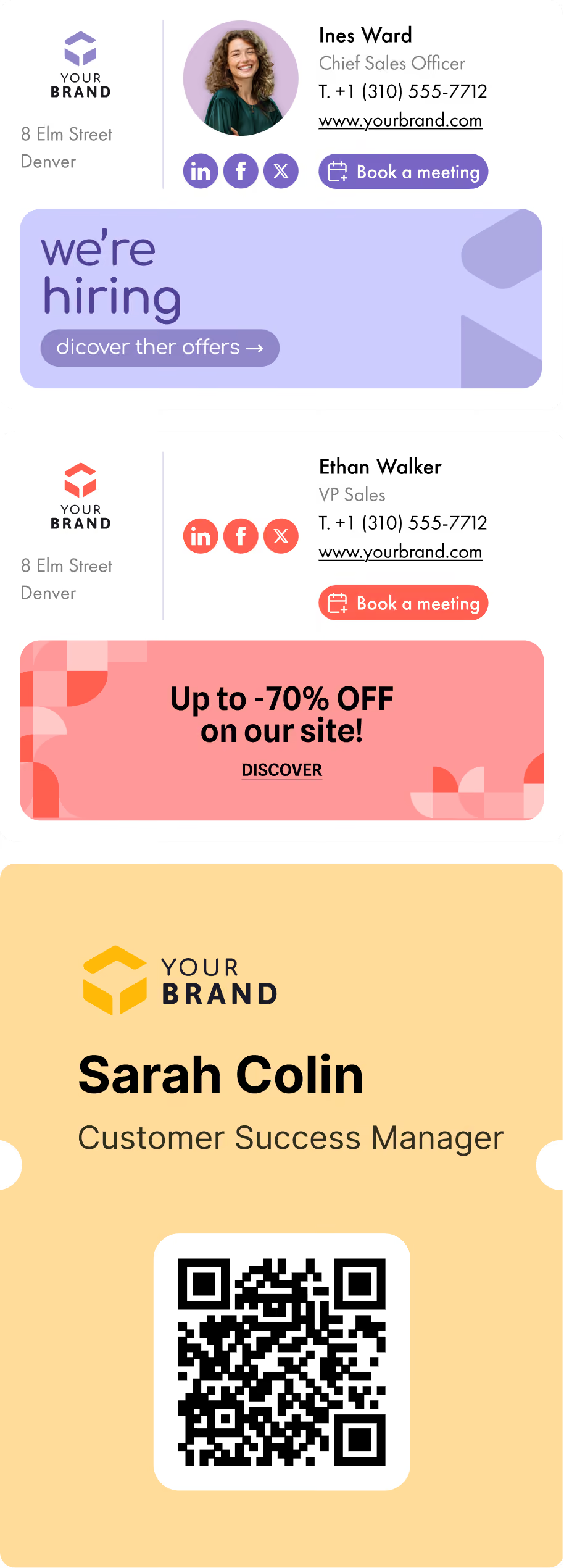
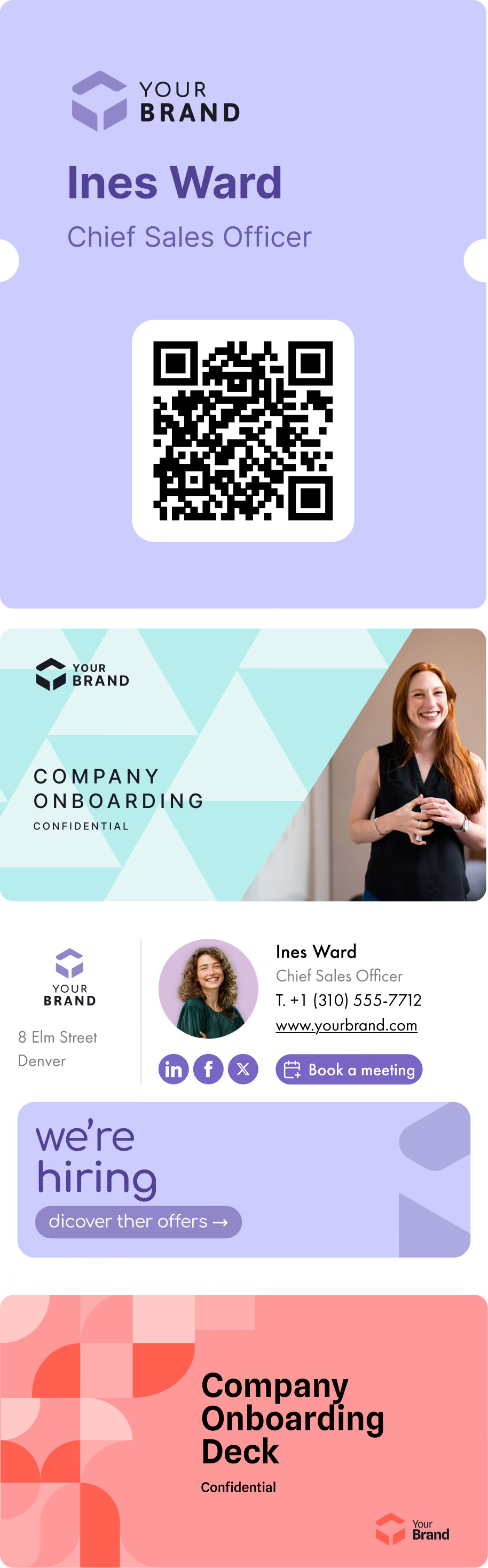
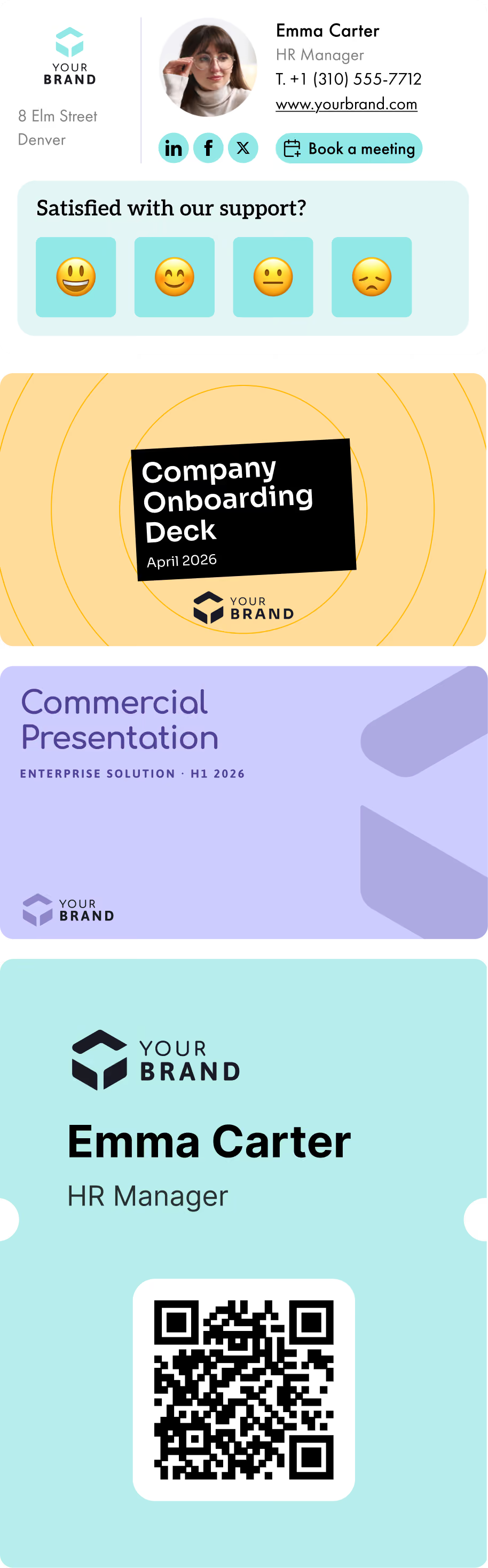
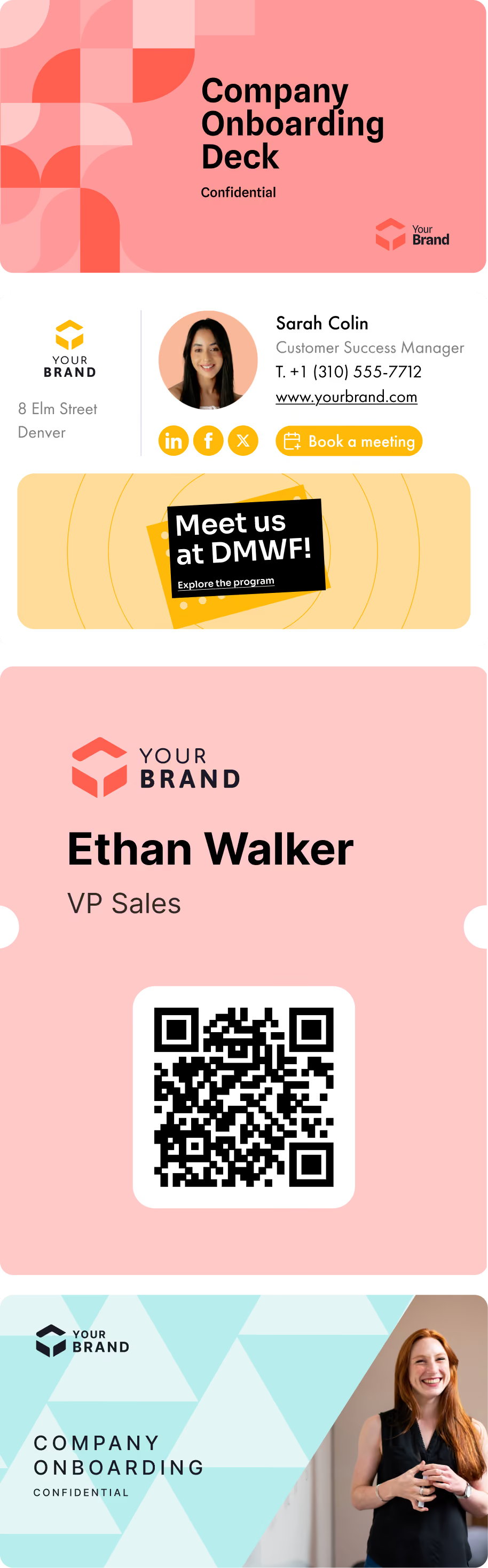
Email signatures are often underestimated, yet they represent a continuous and scalable recruitment marketing channel embedded in everyday communication.
Every email sent by an employee becomes a potential touchpoint for employer branding. Instead of being a simple administrative element, the email signature can actively contribute to talent attraction and brand visibility.
Organizations can use centralized email signature management tools to ensure consistency in branding and messaging across all employees. This creates a unified external image while reinforcing company values.
Email signature campaigns can also be used strategically to promote referral programs, highlight employer branding messages, showcase CSR initiatives, or direct candidates to job openings and career pages.
Because email communication is constant and widely distributed, this channel becomes a subtle but highly effective extension of recruitment marketing efforts.
*****
Recruitment marketing is a comprehensive and strategic approach that goes far beyond traditional hiring practices. It integrates communication, employer branding, candidate experience, employee engagement, onboarding, and retention into a single continuous system.
When organizations successfully align these elements, they do more than fill vacancies. They build strong, stable, and motivated teams that contribute to long-term performance and organizational growth.
In this sense, recruitment marketing is not just a set of tactics. It is a long-term strategy that shapes how people perceive the company, how they experience it, and ultimately how long they choose to stay and grow within it.

Just like a garden needs water to thrive, recruitment marketing needs regular communication and consistency to stay effective. To improve it, focus on transparency, clear messaging, and continuous engagement with both candidates and employees.
Strengthen your employer brand, share authentic employee stories, and maintain an active presence on key channels like LinkedIn, job boards, and your careers page. Consistent communication helps attract better-matched candidates and improves overall engagement.
You attract candidates by building visibility and trust before they apply. A strong employer brand, clear job descriptions, and authentic content about company culture are essential.
Using multiple channels such as social media, referral programs, and career events also helps reach both active and passive candidates more effectively.
Key tools include an ATS (Applicant Tracking System), a career site platform, and analytics tools to track performance.
Social media tools, content creation tools, and employee advocacy or email signature tools also help amplify employer branding and improve candidate reach.
Yes, there are training programs focused on recruitment marketing, employer branding, and digital recruitment strategies.
They are available as HR certifications or specialized courses and help recruiters improve their ability to attract and engage talent more effectively.
A recruitment marketing agency helps companies attract talent by improving their employer brand and recruitment communication.
They support strategy, content creation, job campaigns, and candidate experience to help organizations hire more effectively.