In a context where employees and stakeholders interact less or not at all in some cases, it is more necessary than ever to reinforce your management approach. When applied thoughtfully and adapted to the situation, a more human-centric management style can help resolve key challenges.
By standardizing 100% of your employees’ email signatures, you are implementing an employee advocacy strategy. This will benefit your brand image both internally and externally. When each team member feels like part of a unified group, they are more likely to fully engage and promote a positive image of your brand, especially in a context where connections are becoming increasingly rare. This is an opportunity to remind everyone in your organization that you are united and standing together in the face of the crisis.
Additionally, it is important to ensure optimal information dissemination across all teams. Adding communication banners to share your key messages helps streamline this process!

Externally, standardizing email signatures will help maintain consistency in your identity across all channels. It will prevent any confusion for your contacts and reassure them about your authenticity.

In these times of health and economic crisis, some departments within your company are more affected than others. It’s important to identify which teams are dealing with a heavier workload or facing unusual pressure. For example, your IT department is overwhelmed with managing equipment for remote employees. Your IT manager is constantly being called upon and spends more time setting up workstations. To free up time, you can start by relieving them of email signature management.
Did you know that for a company with 200 employees, around 100 hours per year are needed to manage email signatures? This represents an approximate cost of €3,530 for your company. By opting for a solution like Letsignit, a leader in the French market, you can automate the entire email signature management process and relieve your IT team of this low-value task.
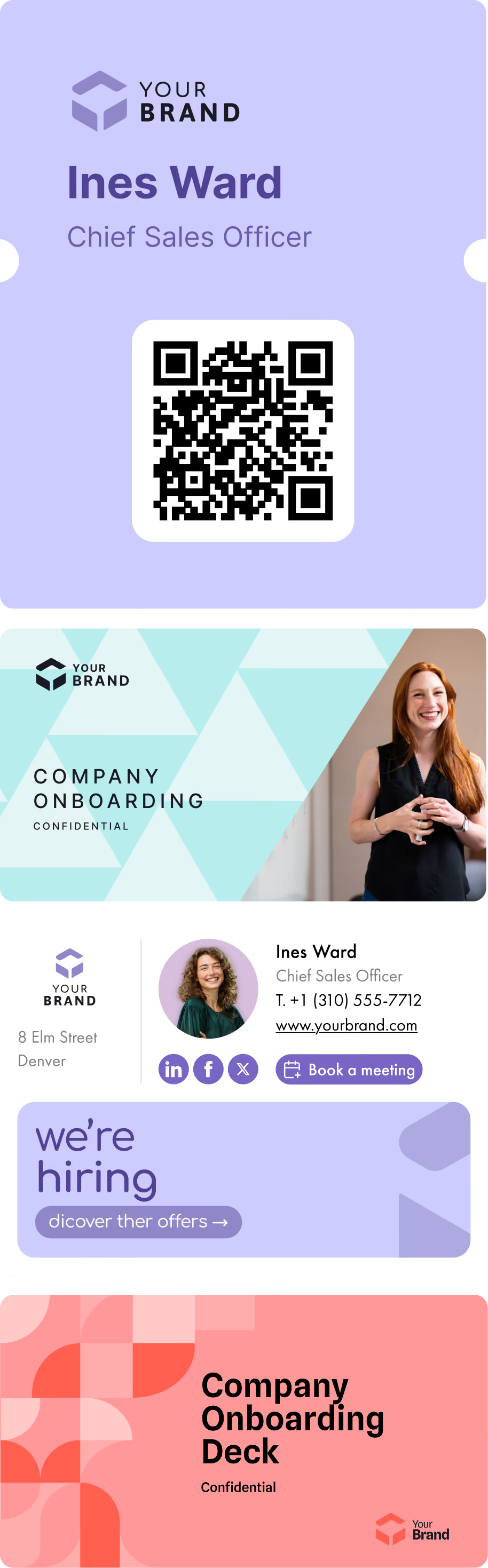
In a context where in-person meetings are becoming increasingly difficult to arrange and phone calls are less frequent, it’s more important than ever to provide your teams with all the tools they need to maintain a personalized connection with their contacts. Once again, email signatures can help improve efficiency. They facilitate interactions between different stakeholders within your company and can humanize those interactions if you choose to include a photo, for example.
Moreover, in a context where your employees alternate between in-office and remote work, it's crucial to ensure that their signatures include the correct contact information. With Letsignit, you can instantly update all employee data through the synchronization of your internal directory. For instance, you can update one of your employee's landline numbers to include their mobile number with just a few clicks. Or, depending on your internal organizational setup, you can opt for dual-number signatures for certain team members.
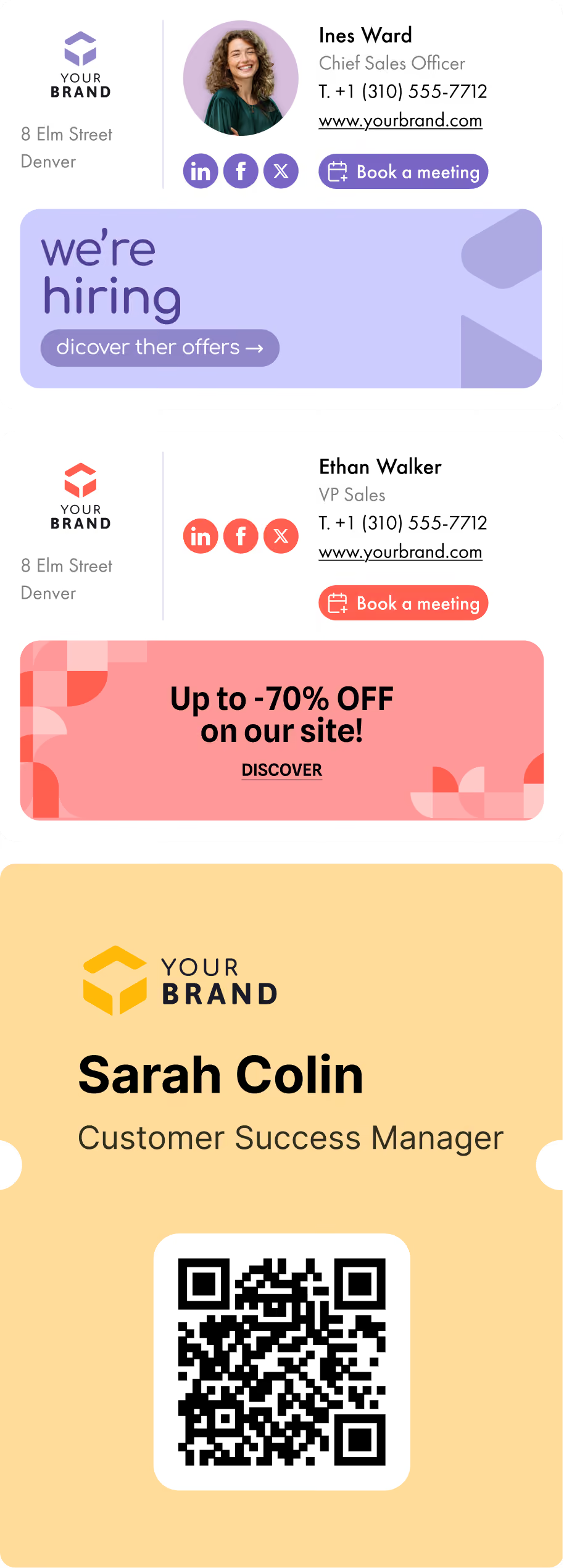
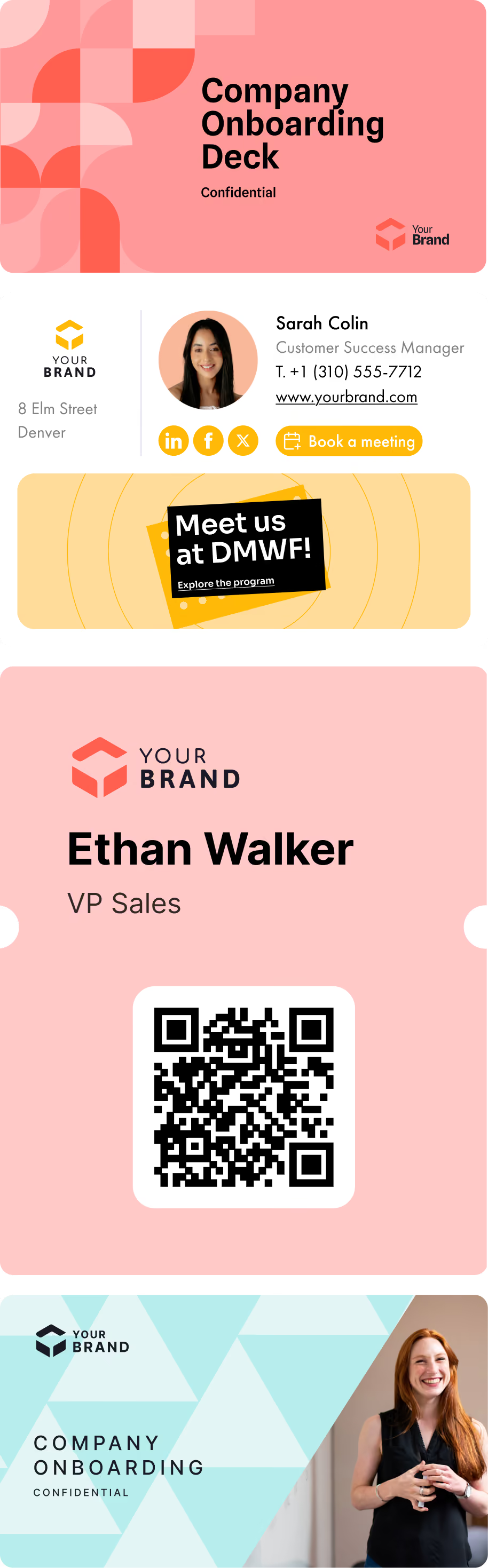
As done by the Exco Accounting Group, you can also integrate a call-to-action button linking to a meeting scheduler, making it easier for your sales or customer service teams to manage appointments.
Ultimately, in this context, your emails represent a true goldmine. Considered your primary communication channel, they have gained even more significance today.
An employee sends an average of 40 emails per day and receives 121. A one-to-one professional email boasts an open rate close to 100%, while mass emails typically only achieve an average open rate of 29%. For a company with 100 employees, this translates to nearly 80,000 opportunities for targeted communication each month. Especially when you consider that personalized targeting significantly boosts engagement.
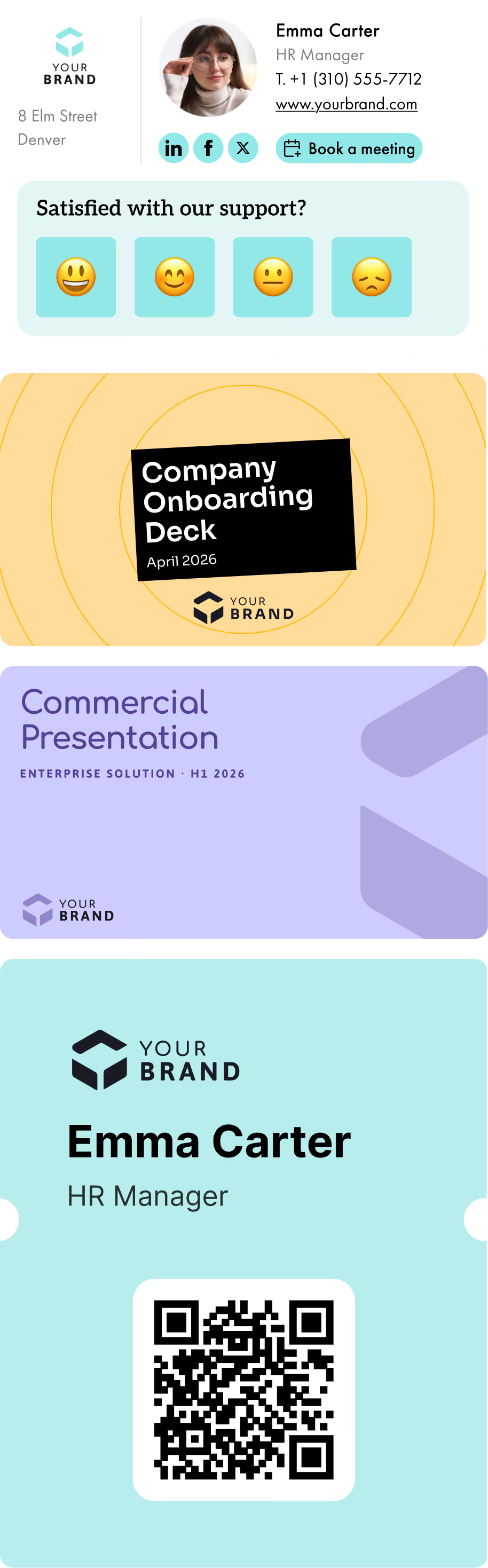
It is crucial for a brand to personalize all its communications based on context, experience, and objectives. In today’s environment, where many budgets have been cut, your emails provide a cost-effective communication channel. By adding communication banners to all outgoing emails, you can easily promote ongoing campaigns, internal organizational processes, virtual events, updated business hours, surveys, and more. This offers your marketing teams a valuable new communication channel.